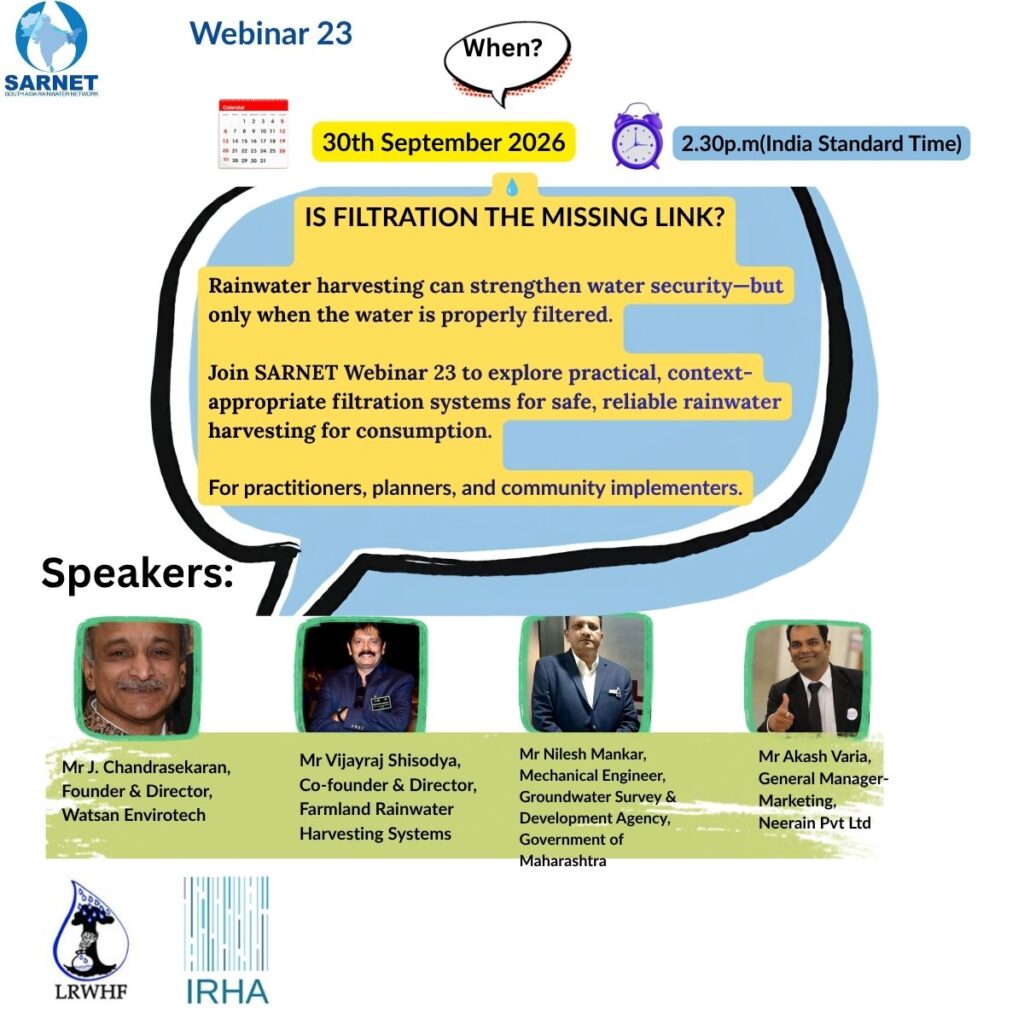
Rainwater harvesting is increasingly promoted across South Asia as a low-cost, climate-resilient response to urban water stress, groundwater depletion, and erratic monsoon patterns. However, many systems underperform or fail because designers treat filtration as an afterthought rather than a core design element. Poor or absent filtration leads to clogged infrastructure, contaminated storage, higher maintenance costs, and health risks—especially when harvested water is used for domestic purposes. Finally, creating confusion skepticism to practice rainwater harvesting for consumption, leading to misinformation that harvested rainwater is not suitable.
Practitioners, planners, and community implementers need practical, context-appropriate knowledge to select, install, and maintain filtration systems that match water quality to intended end uses.
SARNET webinar 23 aims to build awareness of the importance of incorporating contextually appropriate filtration systems when harvesting rainwater for consumption.
Safe and reliable rainwater harvesting for drinking depends on a number of factors from collection, storage—and context-appropriate filtration essential to ensure water quality, long-term sustainability, and successful implementation.
In many South Asian settings, untreated rainwater can exceed safe limits for turbidity and microbial contamination, making filtration a non-negotiable step before storage or use.
This webinar will discuss:
-
- Why filtration is a critical (and often overlooked) component of rainwater harvesting programmes.
- How to select filtration approaches suited to local conditions—从 rooftop debris to microbial risks.
- Practical ways to integrate filtration into sustainable water projects, including low-cost options like sand, gravel, and activated carbon systems.
- Common challenges—from first-flush management to maintenance—and how to get filtration right in community and household systems.
Whether you work in water management, environmental sustainability, development, or community-based programmes, this webinar offers actionable insights to strengthen rainwater harvesting initiatives across the region.
🔗 Register now: